Bohemian style didn’t begin with the hippies – its roots go back to the artists and outcasts of 1840s Paris.The decade’s most iconic women from Stevie Nicks to Talitha Getty were drawing on nearly a century of restless, anticlassical dressing.
Most trend cycles feel arbitrary, driven by what the industry needs to sell rather than anything the wearer actually wants to express. Bohemian style has always felt more personally motivated, rooted in a genuine discomfort with convention and a desire for dress that reflects something deeply personal.
The 19th Century Origins
The word itself tells you where to start. Bohémien was nineteenth-century Parisian slang for the Roma people, who were wrongly assumed to have come from Bohemia in central Europe. By the 1840s it had attached itself to the artists, writers, and idealists of the Latin Quarter who were living outside the rules of bourgeois respectability. Not always by choice, but often by philosophy. Henri Murger’s 1851 novel Scènes de la Vie de Bohème romanticised that world so effectively that it became aspirational. To be bohemian was to be free, creative, and magnificently unconcerned with convention.
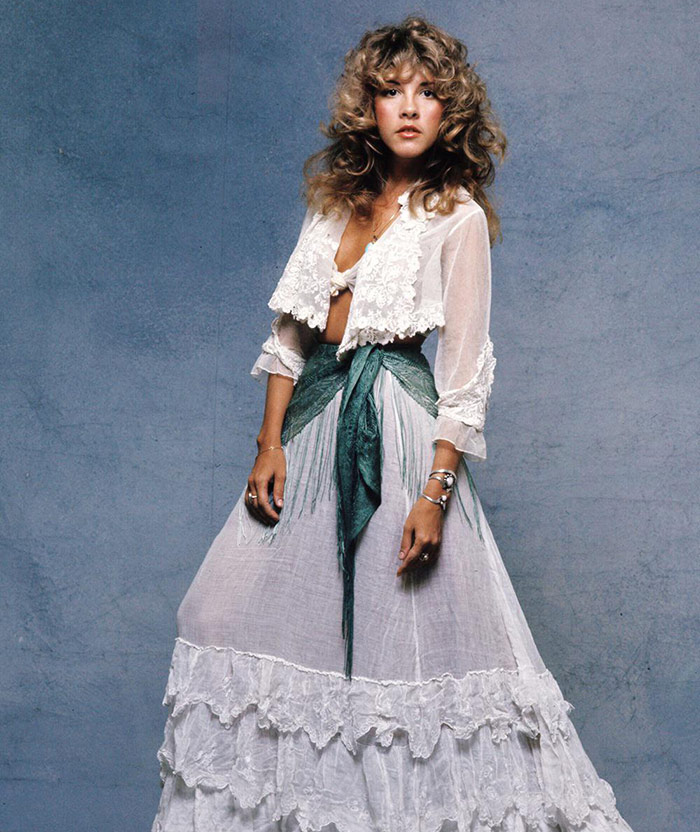
The aesthetic that grew around this identity borrowed from everywhere. Embroidery from Eastern Europe, shawls from Kashmir, velvet from the theatre, peasant blouses from nowhere in particular and everywhere at once. It was deliberately anticlassical – layers over structure, ornament over restraint, the handmade over the machine-finished. Pre-Raphaelite painters clothed their models in flowing medieval robes and called it beauty. The Arts and Crafts movement declared the industrial age spiritually bankrupt and reached back toward craft and nature, and both impulses fed directly into how people dressed who wanted their clothes to mean something beyond social position.
The 1960s Rediscover the Thread
The hippies didn’t invent bohemian style. They inherited it, recognised it, and reinvented it. By the mid-1960s, a generation rejecting postwar materialism and the rigid geometry of early-decade fashion found in bohemianism a ready-made aesthetic style. The silhouettes loosened. Synthetic fibres gave way to cotton and cheesecloth. Bell-bottoms, peasant blouses, macramé, fringe, patchwork, beads by the yard – all of it had nineteenth-century precedent, filtered now through Haight-Ashbury, the King’s Road, and the Indian subcontinent as absorbed into San Francisco record shop aesthetics.
What changed in the 1970s was refinement. The raw counterculture energy of the late sixties got absorbed by fashion houses, by stylists, by women who wanted the freedom of the silhouette without the ideological weight attached to it, and bohemian style gradually shed its association with protest and became something women wore because they simply loved how it felt.
Bohemian Style Icons
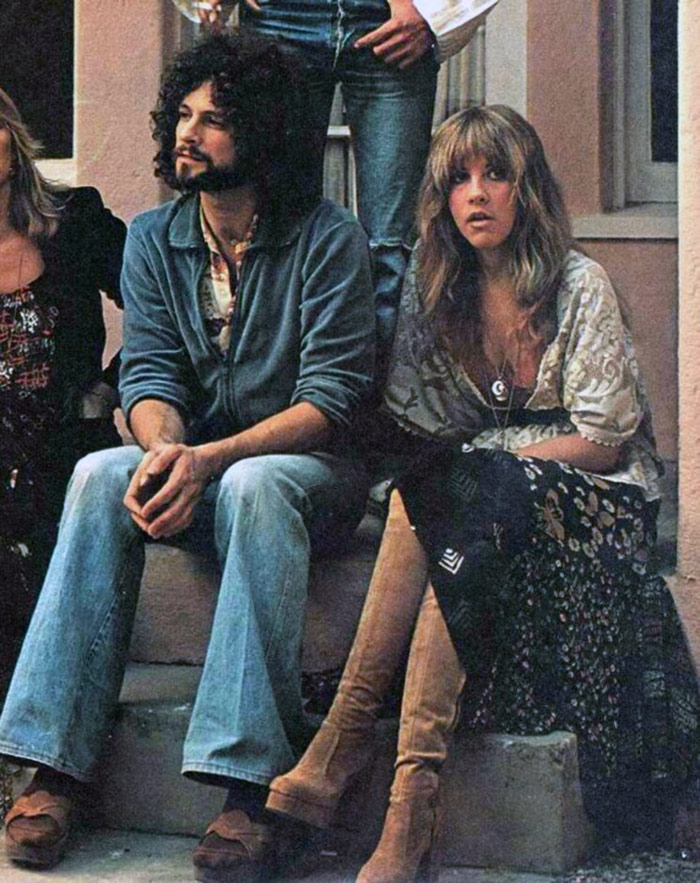
If you want to understand 1970s bohemian style, you start with Stevie Nicks. The Fleetwood Mac era Nicks – layered chiffon, platform boots, velvet capes, top hats worn at an angle over long wavy hair. She defined something that felt genuinely new even while being rooted in Victorian spiritualism and a kind of romantic theatricality that was entirely her own. The clothes looked inevitable on her, something very few women in the history of popular music have managed with quite the same consistency.
Talitha Getty photographed by Patrick Lichfield on a Marrakech rooftop in 1969 – draped in an extraordinary embroidered coat, white boots stretched out across the terracotta tiles, the Koutoubia minaret rising in the distance behind her husband – is another image that defines the decade before it properly began.
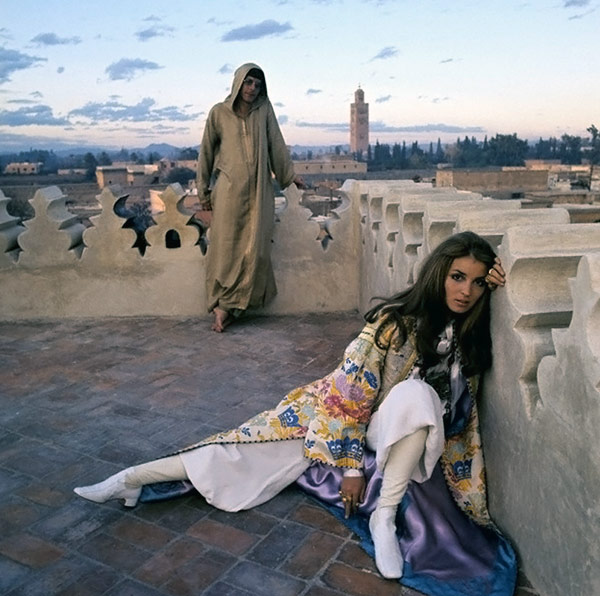
She was a pivotal figure in the jet-set bohemian crossover where serious money met nomadic aesthetics and North African and Middle Eastern textiles entered the mainstream fashion imagination in a way they hadn’t before. I first encountered Talitha Getty in one of my mother’s American Vogue magazines. She had brought it back from New York in 1970. I remember poring over them as a child. There was something in those images that stayed with me. That particular combination of extraordinary wealth and absolute ease, draped in the most exotic bohemian clothes
The Designer: Ossie Clark
No single designer embodied 1970s bohemian glamour more completely than Ossie Clark. Working out of London but reaching into a far wider visual vocabulary, Clark cut bias-cut chiffon dresses and crepe shirts with a fluid understanding of how fabric moves on a body. His prints – often designed in collaboration with his then-wife Celia Birtwell – were botanical, romantic, and deeply saturated. His clients included Jagger, Faithfull, and virtually every significant woman in the London art world. A Clark dress flowed around a body rather than sitting on one, and that physical quality ran through everything that made his work feel so alive to the bohemian spirit of the decade.
Bohemian Jewellery and the Coin Fad
Jewellery in the bohemian tradition was never demure. The 1970s version leaned heavily into ancient and Mediterranean references – hammered gold, coin pendants, layered chains, turquoise set in oxidised silver. The coin jewellery fad tapped into something with genuinely ancient roots stretching back to the Byzantine era and even further to the time of Jesus.
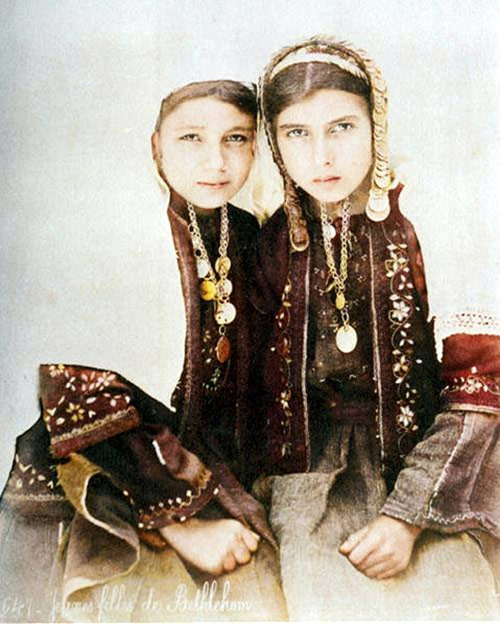
He spoke of a woman’s lost dowry coins in The Parable of the Lost Coin in Luke 15:8-10. In ancient Palestine these coins were sewn in to a head dress of the wedding costume. Worn by all women of the Levant, whether Jewish, Christian or later Muslim. It was called the Wuqayat al-Darahem or the smadeh.
Historically in the Levant region, the females of wealthier families also wore them on special occasions – again as a sign of wealth. The forehead centrepiece suspended from a band or net, known in Arab jewellery tradition as the jabhah, carried protective as well as decorative significance.
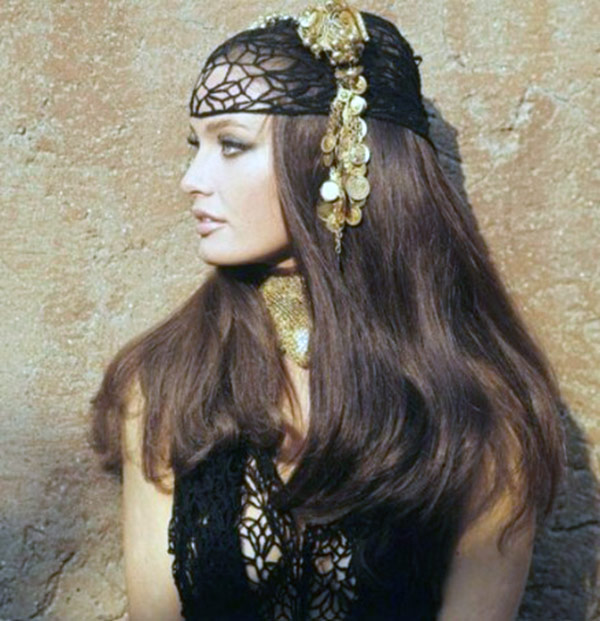
The Austrian actress Marisa Mell wore exactly this kind of piece – a black lace net headpiece threaded with dangling gold coins paired with a hammered gold choker – capturing precisely why Western fashion found it so arresting, carrying the weight of something very old and very far from a Parisian atelier.
Collections from designers such as Roberto Coin Jewelry continue to use textured gold, fluid shapes, floral details, and organic movement that feel connected to the same Mediterranean glamour that defined so much of 1970s style.
What strikes me most, looking at all of this together, is how coherent the throughline actually is. From the Paris garrets of the 1840s to Stevie Nicks twirling in chiffon on a California stage, it’s the same instinct running through all of it – the desire for dress that reflects an inner world rather than performing conformity to an outer one, and fashion keeps rediscovering it because that desire never goes away.
Glamourdaze is featured in the top 10 in Feedspots Top 90 Womens Fashion Blogs. Yay!
That’s all ! © Glamourdaze
This post contains a partner link