
A woman in the late 90s is leaning over a magnifying mirror and pulling her brow hairs one at a time until she is left with a narrow line of eyebrows.
In 2020s, a woman is lying in the studio chair, spending hundreds of dollars on microblading to restore what the previous trends have destroyed. The comparison is difficult to miss. Brows are given a seriousness out of proportion to their previous decades, and that shift deserves a closer look.
A Quick Tour Through Brow History

Eyebrows have always followed fashion, though their role used to be quieter. Back in the 1920s and 1930s, women would pluck their eyebrows into thin lines, then draw them back in with a dramatic downward swoop to suit the era’s mood. Brows weren’t so much a natural feature as a stylized accessory.
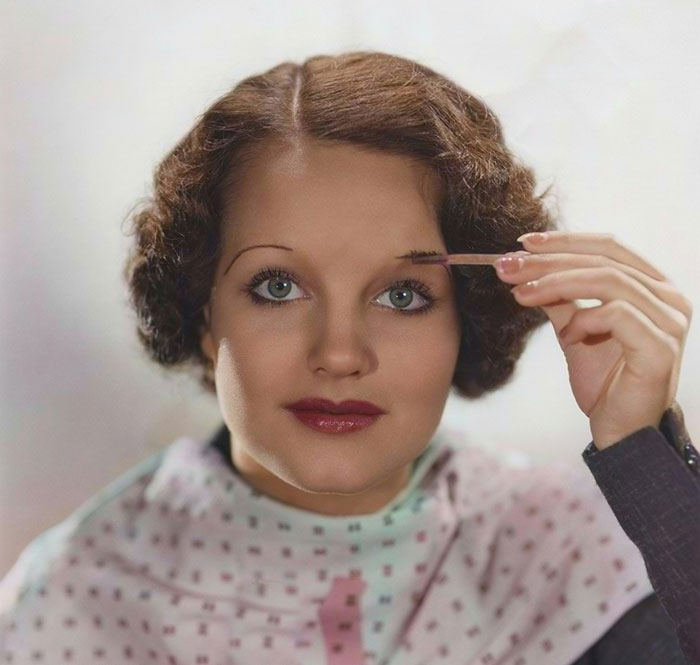
Things softened in the 1950s. Fuller shapes came back – a more balanced, natural look. Audrey Hepburn’s lightly defined brows set the tone: clear, shaped, but never harsh. Then came the 1980s, and suddenly, bold, thick brows like Brooke Shields’ matched the high-energy vibe of the decade.
The ’90s flipped the script again. Ultra-thin brows ruled, often plucked so much that they barely grew back. That look dragged into the early 2000s, leaving plenty of people with sparse eyebrows for years. But the 2010s shook things up: Cara Delevingne and social media changed the whole conversation, bringing big, full brows roaring back into style. Still, until recently, brows seemed more like a trend than an industry category all their own.
The Modern Brow Industrial Complex

Brows now have their own booming business. Just look at the endless list of treatments: microblading, lamination, tinting, threading, waxing, intricate mapping. Each one promises a different fix, whether you’re trying to reshape, thicken, or fix years of damage.
Specialized brow studios have become common. Not hair, not skin – just brows, complete with their own consultations and plans. And the product selection? Wild. Serums, powders, pencils, gels, gadgets – they take up whole aisles now. Social media feeds this obsession, too, since we’re all zooming in on every little detail. Brows aren’t just an afterthought anymore. They’re carefully designed and tended, right from the start.
The Regrowth Reckoning: Undoing Decades of Damage
The aftershocks of the 1990s overplucking didn’t just fade away. So many people tweezed their brows until, eventually, some hairs just stopped coming back. Sparse brows became a lasting problem, not just a passing one, and that changed the whole approach to brow care.
Regrowing takes patience. Step one: put down the tweezers. For anyone who’s tweezed for years, letting things grow out feels awkward (and those first patches can look pretty strange). You have to stick with it – that’s the only way to get through the uneven, slow progress. While waiting for hair to fill in, most people reach for pencils or tinted gels to even things out.
A lot of products and treatments have popped up to help. An efficient eyebrow serum with peptides helps boost new growth over time. Castor oil, an old-school DIY fix, is back in the spotlight for its conditioning benefits. More clinical options aren’t just for the scalp anymore – platelet-rich plasma is now used for brows in some cases. A few people even try minoxidil off-label, but that’s something to be careful with.
This whole process is personal. Regrowth hits home for a lot of people who feel stuck with choices they made years ago. But as hair starts to come back – even a little – it does more than just change your face; it gives back some confidence. Regrowth has become a real topic in beauty circles now, proof that eyebrows matter more than ever.
What Makes This Era Different
Beauty is detail-oriented these days. Brows are shaped in a keen sense of symmetry and proportion. The methods, such as brow mapping, involve measurements of the face to determine the appropriate balance.
The so-called no-makeup look is a nice example – brows appear as barely touched, yet the truth is that there is an entire batch of products and a lot of blending involved. This approach reflects a broader shift: people desire smooth outcomes that appear effortless, even though the process becomes quite detailed.
Technology simply increases it all. Every minute aspect is on display on social media with high-res cameras everywhere and unlimited photo sharing. Perfect shape and definition are promoted by celebrities and digital filters, prompting everyone to strive to achieve them. It means that brows receive regular attention, as opposed to a quick maintenance here and there.
The Counter-Movement
Naturally, not all trends are in line with it. Bleached brows, crazy forms, and even thin lines are back in certain circles, primarily among the younger generation who takes inspiration from past decades.

Even these differences are based on conscious styling. A relaxed brow still requires grooming, and a bleached appearance is dependent on a precise application. The attention to detail remains even when the style changes. Brows always remain in the limelight, regardless of where the trend goes.
Conclusion
Looking at how things changed, it is clear that brows were once plucked without much consideration of long-term consequences. Now, people are spending loads of time and money fixing and pampering them.
Brow is having an upsurge in popularity like never before. There is more to such a concentration. People now intentionally style their brows and learn from old habits, doing what works well on them. Brows have become a literal focus of personal style, whether you are regrowing them back or modifying the shape.
That’s all ! © Glamourdaze